A benefit-driven guide on how to stay fit after 50
Growing older, as exciting as it may seem, brings a special challenge when it comes to fitness.
Due to hormonal shifts, metabolic changes, and mental fatigue, our energy and motivation are at their lowest levels.
This comes at a time when we need the most movement we can possibly get, to maintain our health, vitality, and quality of life. And last but not least, to look our best in this phase of life.
What is happening to your body during menopause?
– Muscle mass loss
As estrogen and progesterone decline, there is a reduction in muscle mass – this is called Sarcopenia. This leads to poor balance and an increasing loss of independence.
– Bone health
After 40, we have to pay special attention to our bone health. The risk of osteoporosis increases greatly. This is the condition where our bones become weak and brittle, leading to a higher risk of fractures.
– Heart health
Decreasing estrogen leads to an increase in LDL levels (bad cholesterol), decreasing of HDL levels (good cholesterol), and higher blood pressure.
– Mental health
Hormonal fluctuations have a great impact on our mental health, with mood swings, anxiety, and depression being the most common symptoms.
Exercise plays a big role in all of these conditions. All of the data available points to the same conclusions: Staying fit is one of the most important things you can do for your health, both for your body and mind.
So, how exactly does exercise help? Let’s dive into the top 5 reasons to lace up those sneakers – even on the days you’d rather stay on the couch!
5 reasons why we want to stay fit after 50
Managing weight
Metabolism is the mechanism by which the body processes food and drink into energy. Muscle mass helps maintain metabolism high, burning more calories, even when we don’t exercise, even when we sleep!
Feel free to use this fact to motivate you during exercise – I love the feeling of lying in the sofa in the evening, knowing the weight lifting I didn’t want to do earlier is still working for me.
Improving sleep
Exercising regularly has a direct impact on sleep, and you may feel it on the same day!
The most studied type of exercise to impact sleep is aerobic exercise. But in fact, all types of movement will have a positive outcome on sleep. Even walking!
My take here being you should pick whatever sport you like, and have fun!
Boosting mood
Here is a well studied benefit of exercising!
When we exercise 3 key neurotransmitters get activated:
Serotonin – The neurotransmitter that helps regulate mood, sleep, digestion, and many other important functions in our body.
Dopamine – Is known as the feel-good hormone. It is produced in the brain, and plays a crucial role in many functions, including mood, motivation and the reward system.
GABA (Gamma-aminobutyric acid) – That is the neurotransmitter that blocks specific signals in the central nervous system. It produces a calming effect, helping with anxiety, stress, and fear.
These 3 neurotransmitters are activated at the same time, and this is such a powerful mechanism that will not only boost your mood, but support your mental health all together.
Maybe not directly when you’re doing the exercise, but I promise you, afterwards, you will be thanking yourself for making the effort!
Strengthening bones
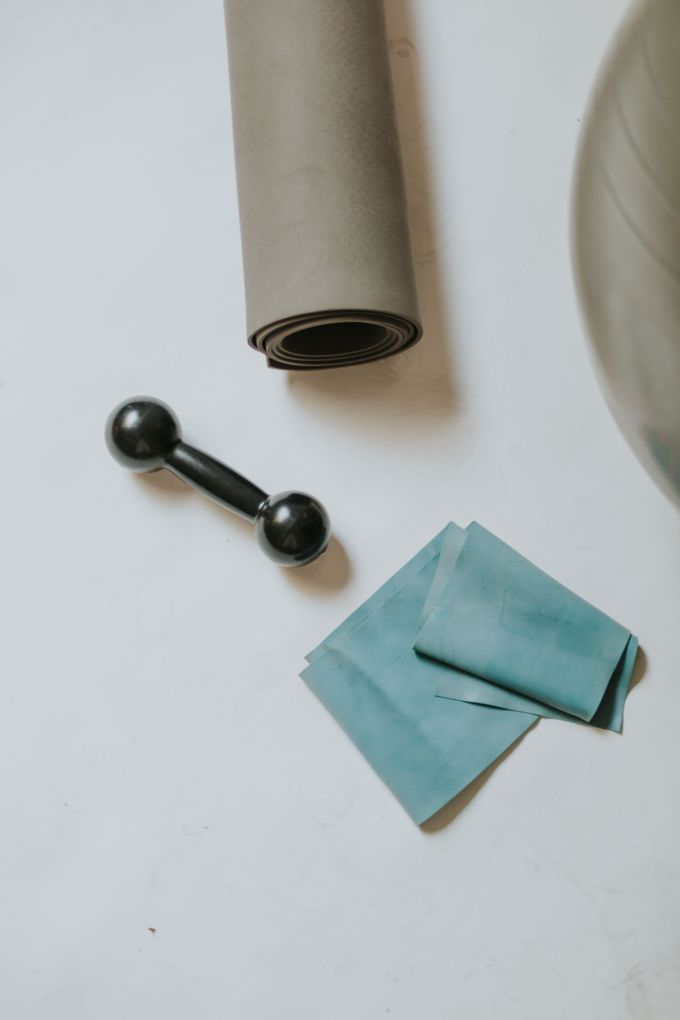
Regular exercise is one of the most important measures to maintain and improve bone health. Weight-bearing and resistance exercises are the most effective in keeping your bones strong: Walking, running, dancing, strength training, climbing stairs, and hiking are good examples.
Enhancing energy
It may sound like a contradiction, but yes, you have to first tire yourself to feel more energetic later.
I explain: Exercising increases the amount of oxygen circulating in your body, leading to a more efficient use of its energy. Exercising also leads to an increase in hormone levels that makes you feel more energetic.
pexels.com/@leticia-alvares-1805702/↗
How I deal with my best excuses
Now that we know the why, let’s see the how – starting with the most common hurdles and how to deal with them.
No time
Lack of time is the most common problem we all deal with when it comes to exercising.
The guidelines say 30 minutes per day, 5 days a week, for moderate aerobic activity. This could be jogging, walking, hiking, dancing, swimming, and more.
2 to 3 times per week strength or resistance training.
And a 1-time per week sprint.
This is the recommended guidelines; what that looks like for each one of us could vary a lot. Let’s break it down into small, doable bits.
The most important thing to retain is consistency. That is not having the perfect training every day or week, but doing what is possible every time is. 10 minutes is way better than nothing.
When you keep showing up, even if it is not perfect, it will compound with time, and I find it way more motivating.
My favorite way to keep the pace are fitness snacks. These are small, 10 to 15 minutes trainings.
Things like lifting weights, jumping, dancing, brisk walks, squating or planking, just to give some examples.
Motivation
Staying motivated is hard, I know. Especially after a bad night’s sleep, or on the days where our schedules are so full-packed that exercising is the last thing we want to do.
Starting small and increasing the activity over time can be the best approach. It gives time to your body and mind to adjust.
Picking something you enjoy doing is crucial to maintaining consistency over time. For me, the rescue activity is walking. When everything fails in some weeks, walking is the thing I always can squeeze in between whatever is happening.
– Joint pain
Physical limitations can be a real deterrent to exercising. Please, always consult with your physician before starting any physical activity.
Low-impact exercises, like swimming or cycling, can be helpful and really fun.
On the other hand, flexibility training could bring relief to the symptoms. This could be yoga or pilates.
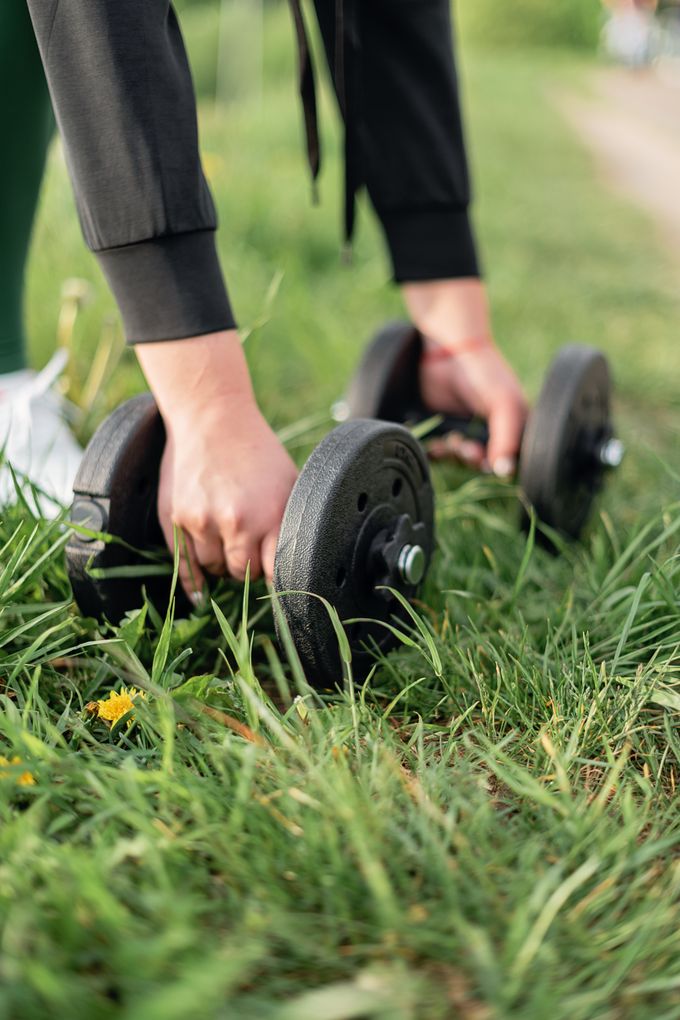

What to eat to support your fitness programm
– Protein
Protein is one key essential nutrient for muscle maintenance, among other things.
The recommended protein intake for women after 50 is around 1 g of protein per kilogram of body weight. This can vary with your level of activity.
I recommend to include protein at every meal, with special focus on breakfast. This will help you throughout the day, not only with your workouts, but also with your mood, focus, and energy.
I also recommend to try getting your protein from unprocessed food. If you do need protein supplements, please read the label carefully to avoid getting too many calories and unhealthy ingredients.
– Calcium and vitamin D
I choose to put these two nutrients together because they work as a team to support your bone health.
Our bodies need vitamin D to absorb the calcium we get from our food.
Having enough calcium and vitamin D levels will optimise the benefits you are getting from your training for your bone health.
– Hydration
Our bodies need water for a number of key functions, just to give some examples:
– Help the brain function at its best. Thinking and focusing are a lot harder when you’re dehydrated.
– Keep the body moving. A well hydrated body will have the energy to easily move.
– Manage the body temperature.
– Support for digestion and nutrient absorption.
All of this and much more just with the right amount of water!
Set for success
Don’t be scared by terms like fitness plan or fitness goals, this is your journey, and only you decide how to navigate it.
Achieving a certain fitness level is important, but you get to set the goals and the pace to achieve them.
Again, small steps go a long way!
First, choose something you already like to do, or try something new.
You could be surprised by something you would never have guessed.
For me, it was lifting weights. I just feel so good after each session, I don’t want to miss it anymore.
Another way to keep the motivation is to engage on some some group activity. Like going on regular walks with a friend, or joining a class for your kind of sport.
Start small, listen to your body, and adapt as you go. And most importantly, celebrate your progress, you’ve worked for it – you deserve it!
I would love to know about your fitness journey!
What are you doing right now?
Which activity do you think could be fun to do in the future?
What keeps you motivated, and what’s your greatest difficulty?
Please comment in the section below.
Stay tuned, I will be posting some specific workouts, directed for women after 50.